
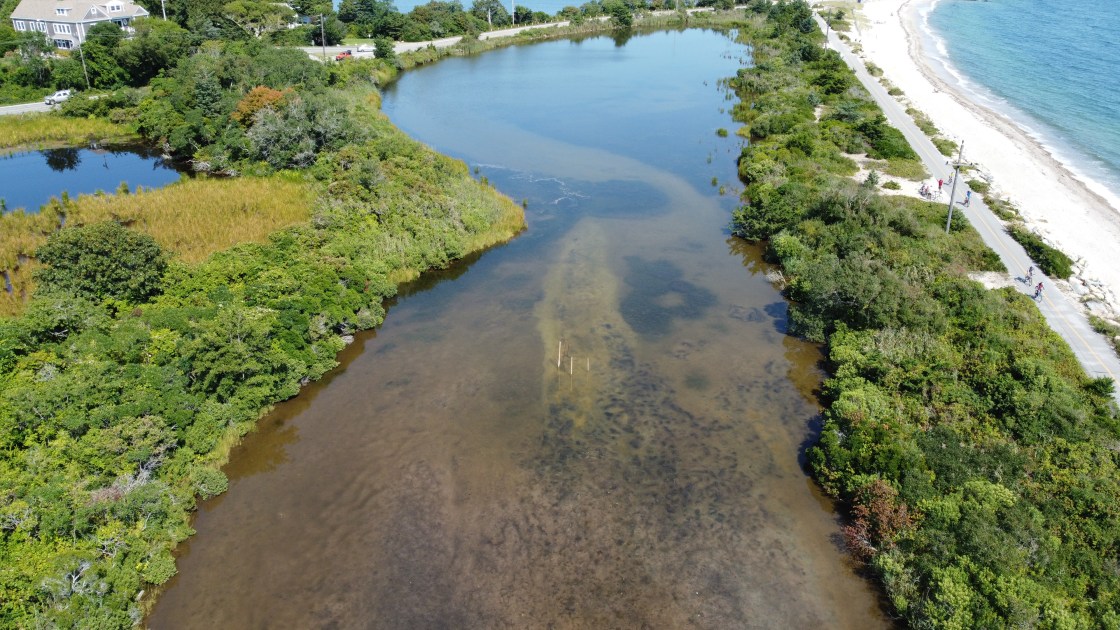
Estuaries are widespread ecosystems that are important for global carbon, nitrogen, and sulfur cycles. Understanding the biodiversity and function of these ecosystems, which are intimately connected to human populations, is critical for monitoring planetary health. Our system, Trunk River, is a shallow tidal lagoon where phototrophic microorganisms, particularly green sulfur bacteria, frequently bloom.

These phototrophic blooms are ideal model communities to investigate ecological niches of oxygenic and anoxygenic phototrophs, their coexistence and their interactions with each other and the environment. We are particularly curious about their ecology and biogeochemistry: What drives them? What allows them to persist? What ultimately terminates them? How do they contribute to the cycling of important elements like sulfur and nitrogen? We are using a variety of approaches to answer these questions, from microbial and viral multi ‘omics, to stable isotope probing, culturing of isolates, and gas chromatography.
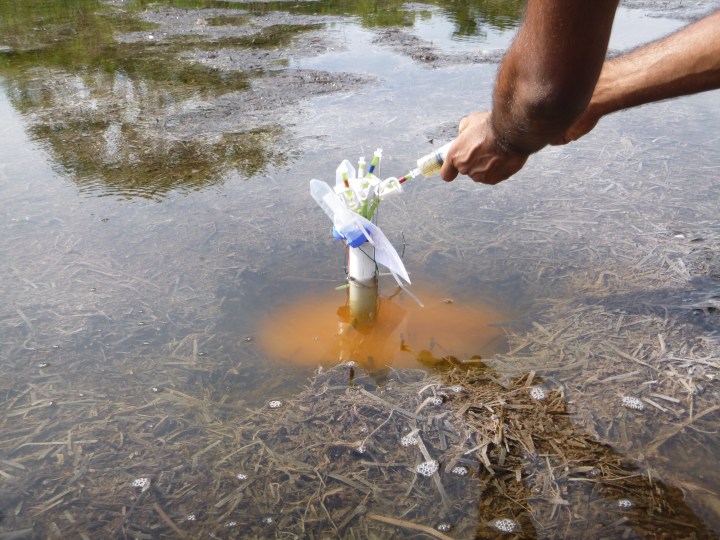
The first insight into this amazing microbiome were published in Environmental Microbiome in January 2020. A bit more about the study and behind the scenes info are featured in a nice MBL press release.
 Ruff Lab